HOME

PROJECTS

Click on some titles or pictures for more information.


HOUSE DESIGN


2003 Dualistic House, Erice IT

with Pietro Maltese

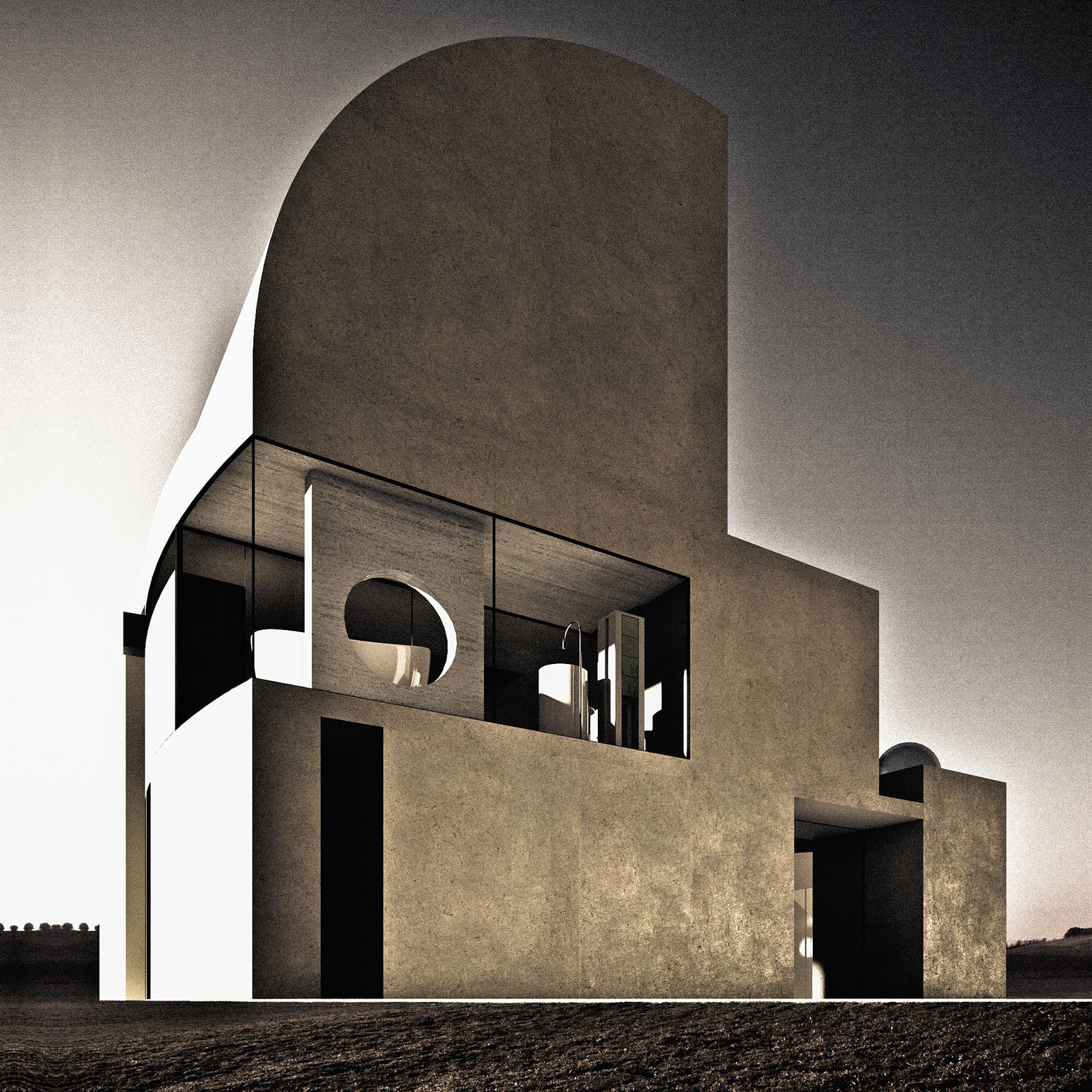
A pre-existing reinforced structure on three levels, arranged on a narrow plot in the hills, is the pretext for this next architectonic text. Stripped of walls and ceilings, the reinforced cement grille looks like an abstract geography, an irrational place on and with which to rewrite space. Here we experiment with a dual and contradictory situation. It brings together primary volumes and fluid objects with curvilinear structures, with the aim of building an organism arising from the juxtaposition of diverse spatial places which are nonetheless continuous and interconnected. A coordinated succession of shapes and supple lines shows off a prismatic and sharp triple height. Two opposing glass devices connect, aesthetically and physically, the inside to the outside: to the south a brise-soleil extends for eight metres in height, linking the three levels with its horizontal scansion; to the north a bright glass apse allows access to the terrace, condensing the dining area ceiling in elevation. Its walls are made up of a scansion of metal pillars and plates of glass orientated along the semi-eliptical perimeter. To the rear, the progressive reduction in height of these elements, which determines the hanging of the ceiling, adds to making the curvilinear perimeter more visually expressive, thus granting a sensation of spatial dilation. In plan, furthermore, the rotation of the eliptical line compared to the rest of the building gives a bifocal perspective, accentuating the independence of the dining in contraposition to the vertical space adjoining the brise-soleil.

Antonino Cardillo architect - Dualistic House in Erice


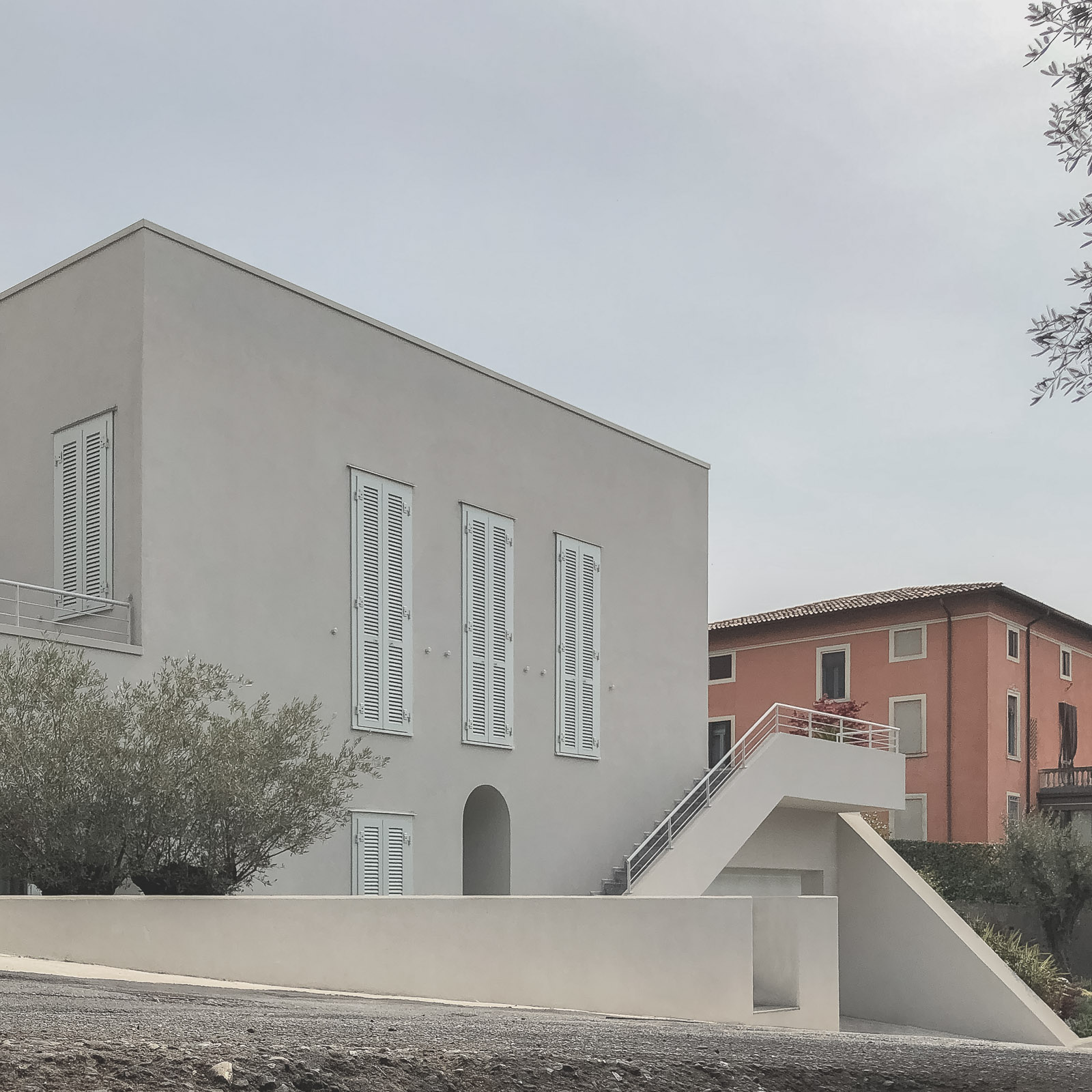
2005 White House, Rome IT

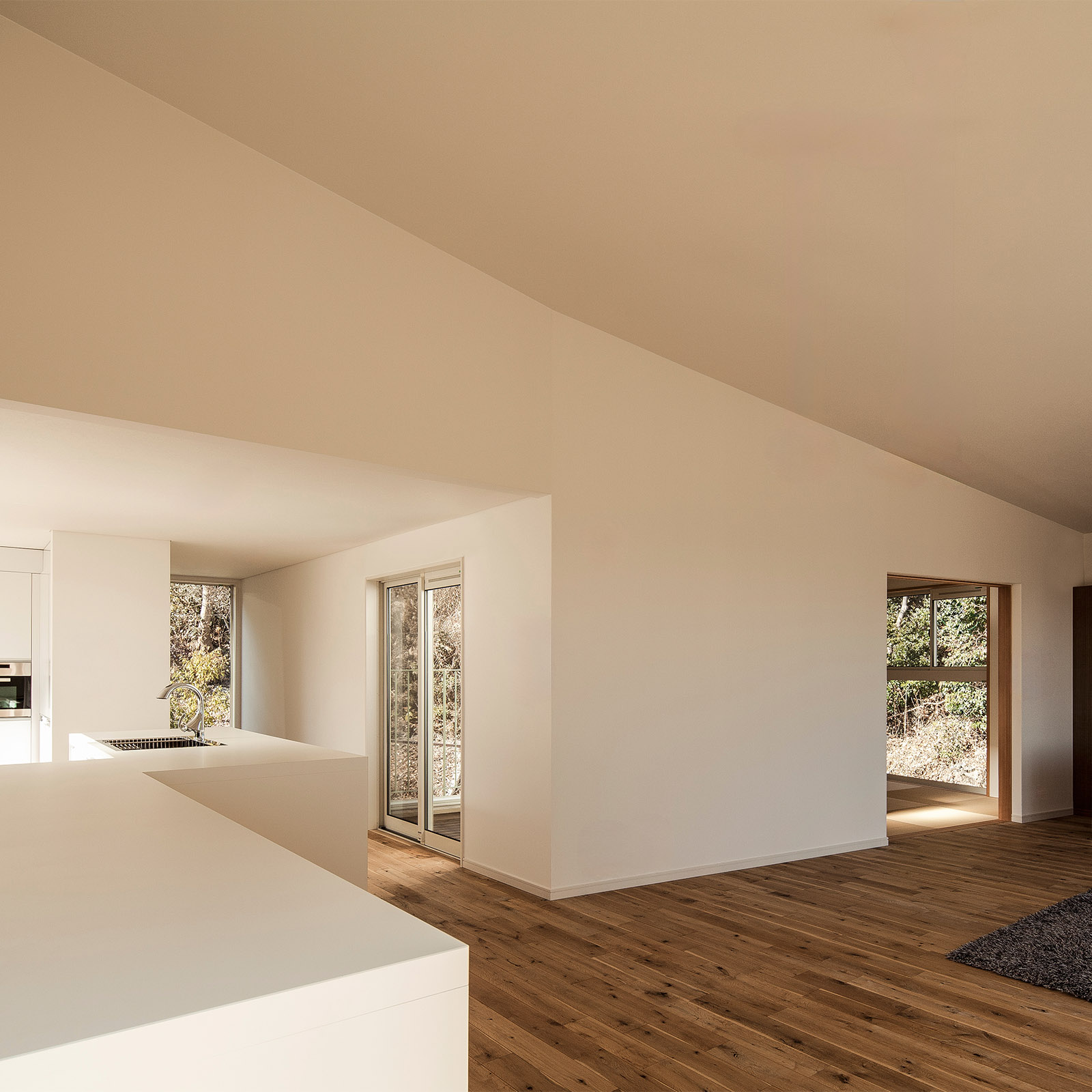
The threshold of a house can be likened to the overture of an opera. It gives some glimpses but at the same it doesn't reveal the most important content. In a house with grounds, though, it should not be identified simply as the "entrance door" since the perceptive experiences of the inside and the outside are not separate. At the same time the house and its grounds are two distinct identities that necessarily require heterogeneous constitutional content. Where, then, if not in the passage between these two identities, should we look for the foundation of a new strategy of operation? In the design hypothesis such a passage does not come about by prompt and instantaneous action, like the simple opening of a door, but acquires its own "temporal duration". That is it is realised substituting the usual concept of the "hole in the wall" for a continuous space, creating the aforementioned "duration" of the event. So the entrance becomes concrete in a cavity excavated in the mass of the building, which as well as polarising the pedestrian path of arrival from the grounds, sheltering from rain and sun, connects with the covered part the dwelling with the bedroom for guests. The walls which define the portico in its length do not circumscribe a closed space but run fluidly and divergently, ending in a channel open towards the large room inside the house. But the right-hand wall makes an unexpected detour. It redirects the path of the observer placing him along a hypothetical diagonal line from the room which suggests a dynamic perception of the living space.

Antonino Cardillo architect - White House in Manziana


2007 Ellipse 1501 House, Rome IT

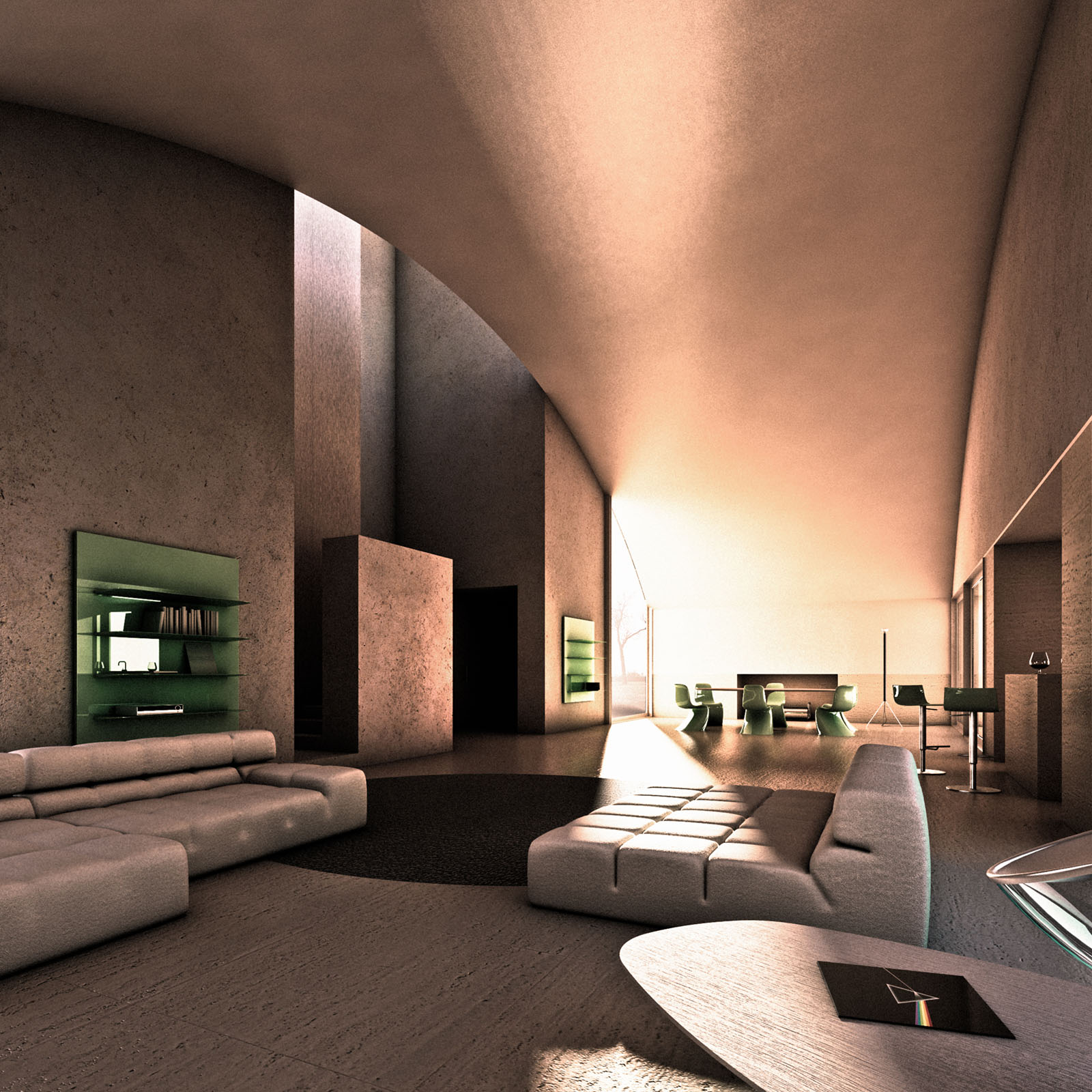
Near a rocky slope, behind a thick blanket of pines, lives a house in the shape of a tower. It is not round, but its geometric set-up dilates toward east and west to welcome in the low, warm, extended light of the sun at dawn and dusk. A double wall, made from progressive monolithic castings of lightweight concrete, develops the perimeter of an ellipse, supporting, above, a stretched out, slanting cover. In the internal space between the two walls, an ample interspace comprises the accessory area (stairs to the bedroom, bathroom, boiler, storerooms, cupboard) serving the occupants of the house and contributing to stabilising the temperature of the large central hall. Inside, the original compositional set-up is reinterpreted by means of a cross-sectional system, rotated in plan relative to the largest axes of the ellipse; it co-ordinates several stereometric spaces, including the guest bedroom on the ground floor and the open plan bedroom on the first floor. All around, deep excavations in the outside wall suggest unexpected fleeting routes towards the rocks and the wood on the outside; they break up the sky into a multitude of quadrants. Over the course of days, nights and seasons, the thick reveals of the windows register the changing colours of the celestial hemisphere. Thus the light of the sky makes a mutable architecture, articulating the passing time. So the light colours the space, and changes with itself. In supporting these changes, the fabric remains in its original essence: colourless or tending to grey.

Antonino Cardillo architect - Ellipse 1501 House in Rome


2007 Anfossi House, Palermo IT

with Antonietta Iolanda Lima

Antonino Cardillo architect - Anfossi House in Palermo


2008 Vaulted House, Parma IT

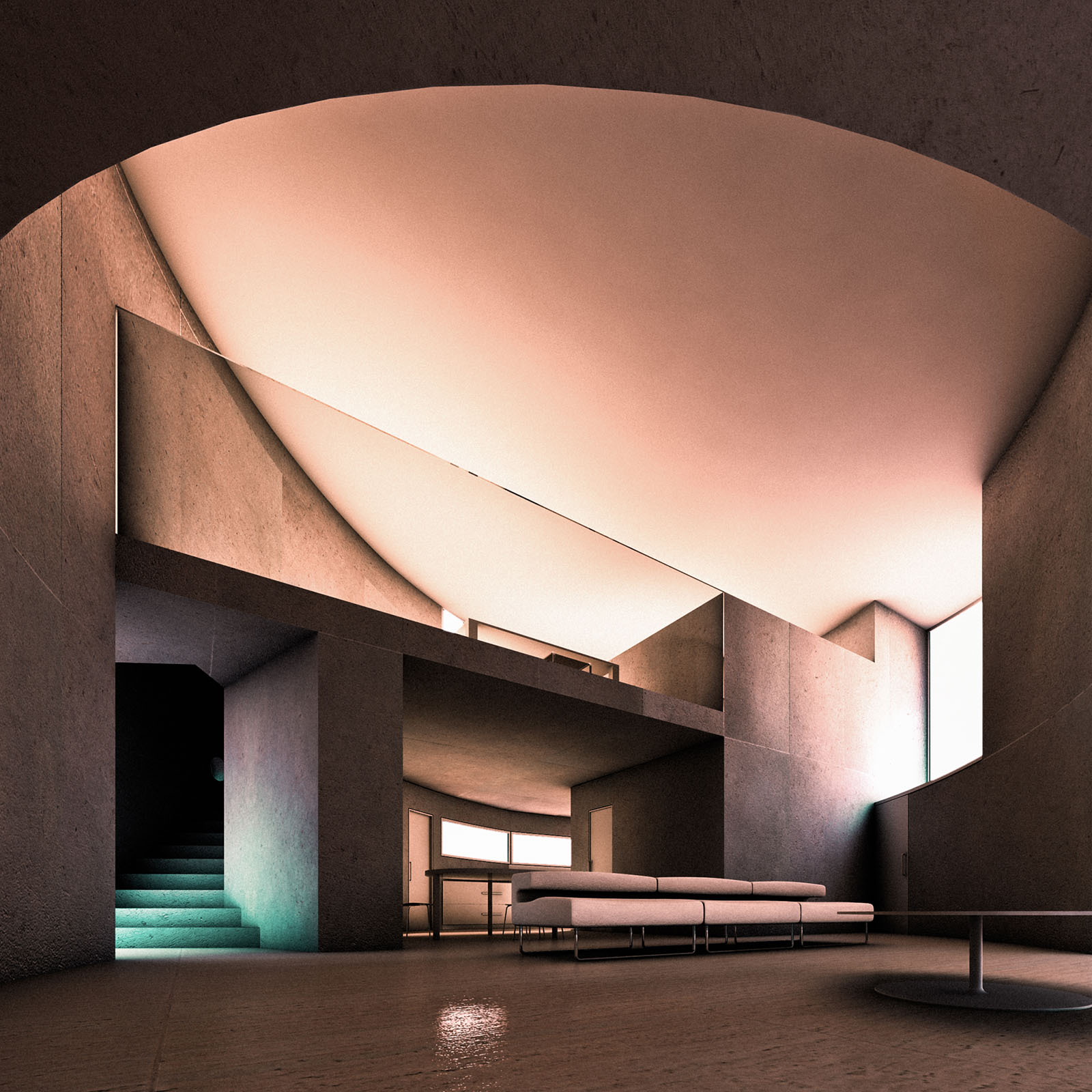
The three zones of working, living and resting are represented in sequence along an axis by juxtaposed edifices whose shape remains recognisable from without: a trapezoidal polyhedron, an ample rectangular hall and a tower articulated on two levels. On the inside, openings and pathways weave a possible dialogue between each cavity. Silences are not all alike. The silence of a large nave is different from that of a room. And the outdoor sounds of the countryside perceived through a great silence can be yet more diverse. So, in a long central hall, modulated in plan on three squares six metres wide the heart of the design is formed. The flooring in travertine and a covering of Venetian stucco spread on the ample side developed lengthways, create, via a chromatic homogeneity, a continuous ribbon which, enveloping the observer, offers a sort of blank page on which to write his or her own experience. At the same time, the light, coming from the long sides of the room, has the possibility to interpret the space. On the south side the position of the windows welcomes in the winter sun and, through a thick wide cement "lunetta", screens the sun in summer. Below, in the centre, a block of travertine is excavated from a low cavity. Inside it a parallelepiped functions as a work surface for the kitchen, occupying the centre; in the background a door leads to the pantry and two short windows mark the corners of the room leading towards the terrace outside. On the opposite side of the hall, to the north, the windows shrink towards the corners, becoming vertical. From floor to ceiling, the openings pick up the fleeting oblique light of the sun at dawn and at sunset in summer which, penetrating the room diagonally, colour the space with new meanings. Finally, moving between the large hall and the tower of the rest room, an azure light, concealing its origins, slips from above along the wooden and cemented walls of the walkways and the stairs accessing the tower, forming an iridescent stage, a picture in perspective in mutation.

Antonino Cardillo architect - Vaulted House in Parma


2008 House of Convexities, Barcelona ES

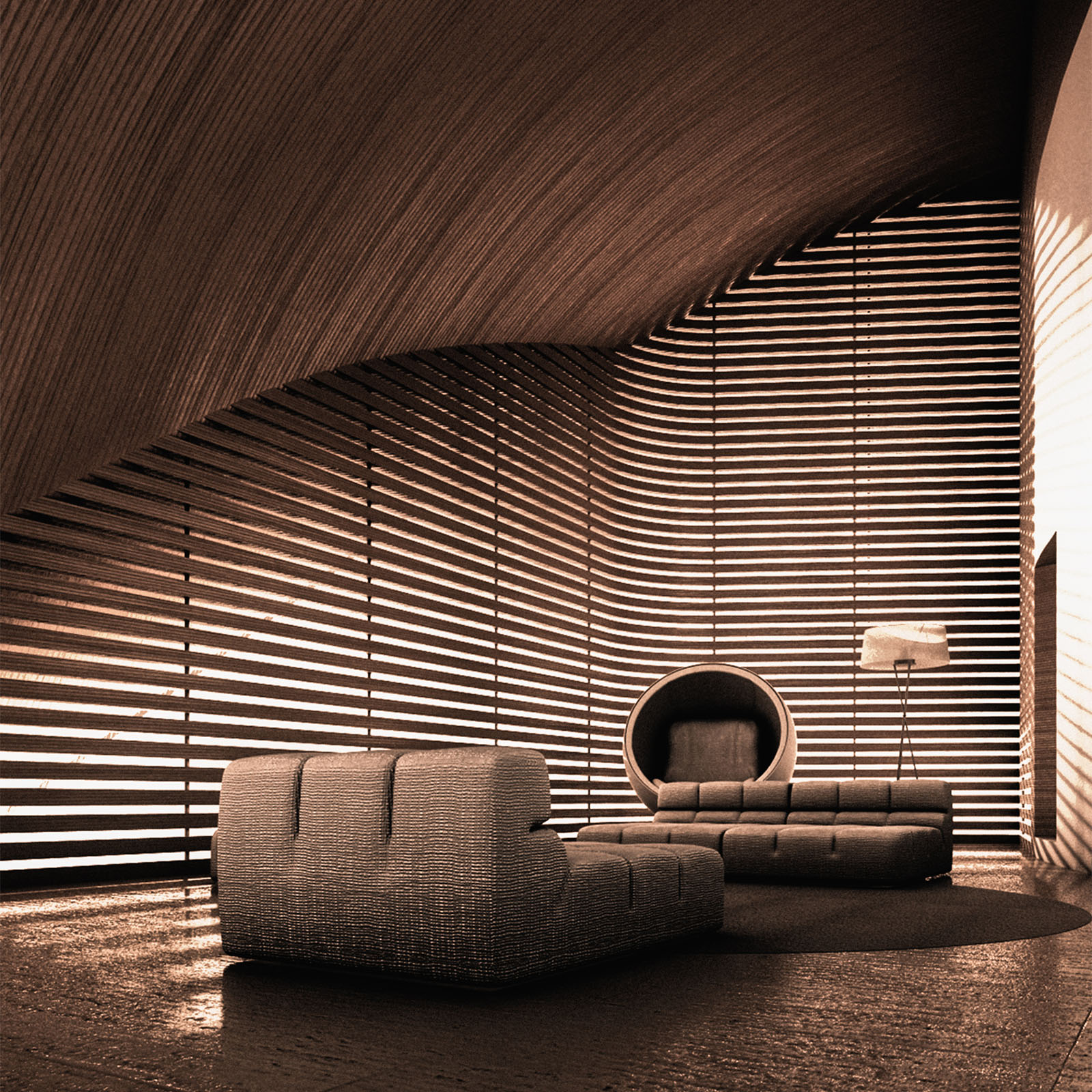
If architecture is music in stone can its "limbs" dance? Architecture only remains still in pictures. In real life its natural state is one of transition. Both man and light move within it. Inside a house among coarse Mediterranean glades and corrugated stone walls, a slanting light, pierced by innumerable narrow repeated blades, inscribes and describes the walls with its impermanent, mutable hand. How many possible stories will this light tell over the course of a year? A curved wall jokes with the light. The light bathes the wall, but reaches the moment and the place in which, going beyond the curve, it takes a tangent, deciding what will be lit and what will be dark. And this movement suggests the indefinite, mutability, shading, ineffability. Thus architecture becomes light interpreted through the "limbs" of the architecture. Like shadows of flesh on flesh, whose forms are both definite and defining. Here, as in a Flamenco dance, the body breaks up, invading the space moving through its potential articulations without, however, defining the void, or, interpreting the many possibilities of moving within it: fleshy and sensual, but equally incisive and precise. Secret but luminous. Closed but open to a multitude of possibilities. A body inside another body. Compressed, suspended and continuous in its curvilinear trajectory. And yet, as in a Flamenco dance, the development of movement, its indefinable ardour, is made real by the successive instant. That solemn, still instant that seems to challenge eternity. Thus, tall and still, a wall opposes silence. And such stillness paradoxically supports the preceding movement, giving sense to its being.

Antonino Cardillo architect - House of Convexities in Barcelona


2008 Max's House in a Small Lake, Nimes FR

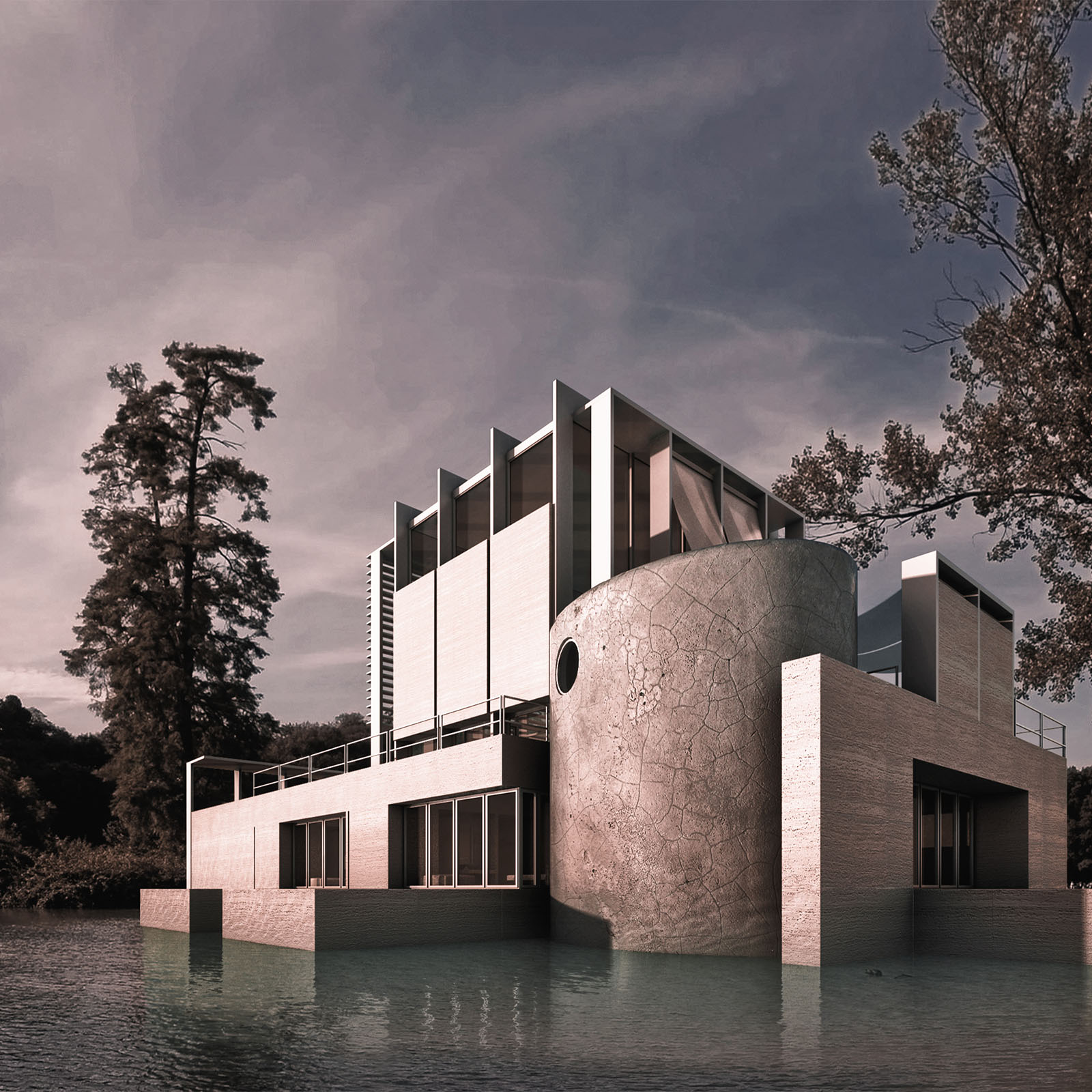
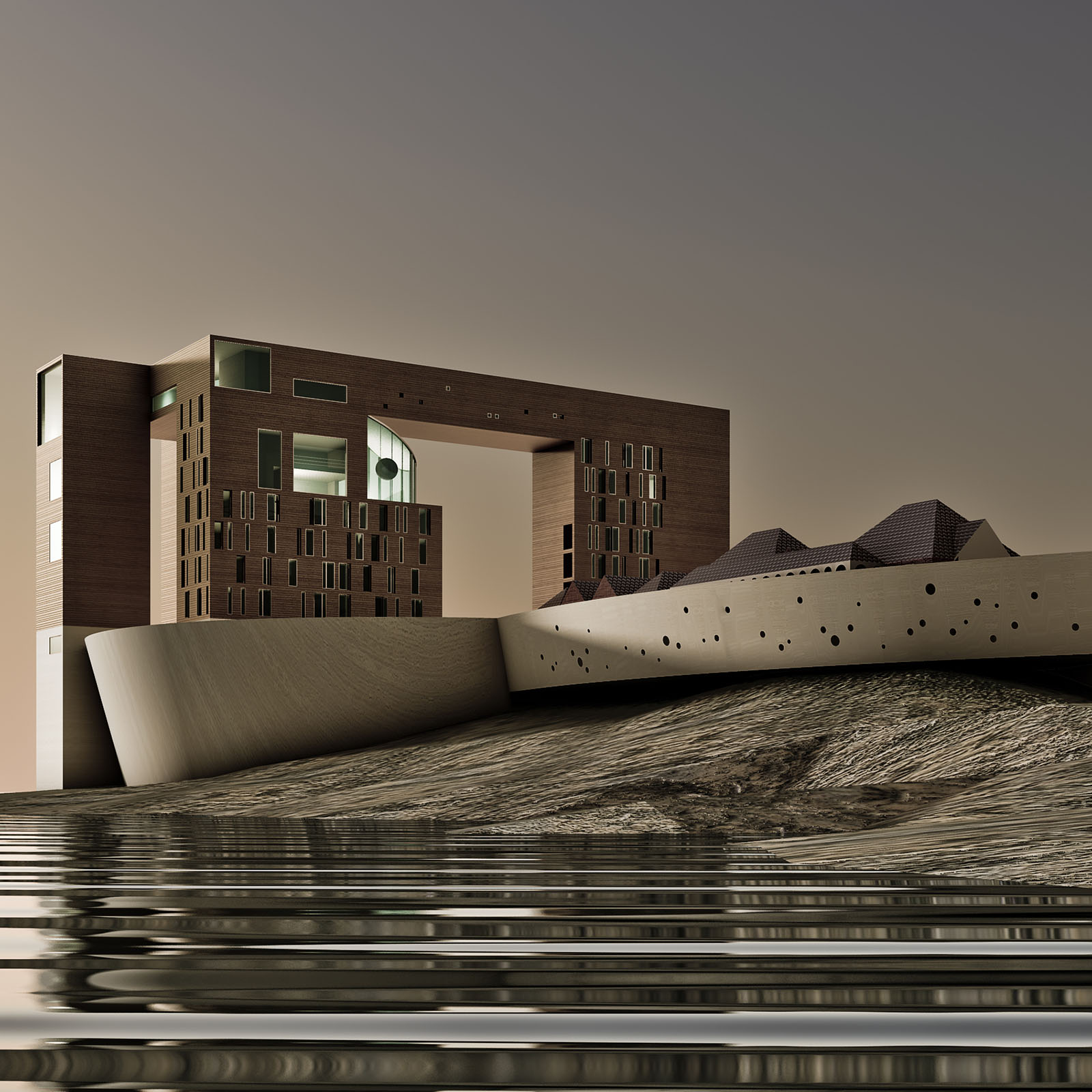
The house looks like the transfiguration of a boat set against the wooded banks of a little lake in the countryside of Nîmes, in the south of France: a human landing stage on the edge of a natural border. The building is made up of two entities contrasting over two levels: a compact basement in travertine comprises the hall and bedroom on whose terrace is set a high, luminous living room, articulated by a slender white metal structure. This at the same time designs the textures of the glass surfaces. The landscape, from within, is thus broken up into myriad quadrants and undergoes an analytical process of reconstruction. The arrangement of the metallic elements, then, regulates the sunlight: an ample brise-soleil screens it at midday, while deep containing walls, covered in teak and suspended a metre off the floor, partially occlude the morning and afternoon light. Outside, to the south, the living area extends its own teak flooring so as to lap the pool. Beyond the mirror of water, in an ambiguous and inaccessible place, a portico measures and interprets the landscape. To the north of the glass room, a textile parabola, stretched between the two edges of the building, shades the external dining area. Lastly, the eccentric collocation of a tower for the stairs subverts the symmetrical composition of the building and determines oblique perceptions of its internal spaces, thus becoming the essential key to a reading of the architectonic text.

Antonino Cardillo architect - Max's House in a Small Lake in Nimes


2009 House for Wallpaper*, Marrakech MA

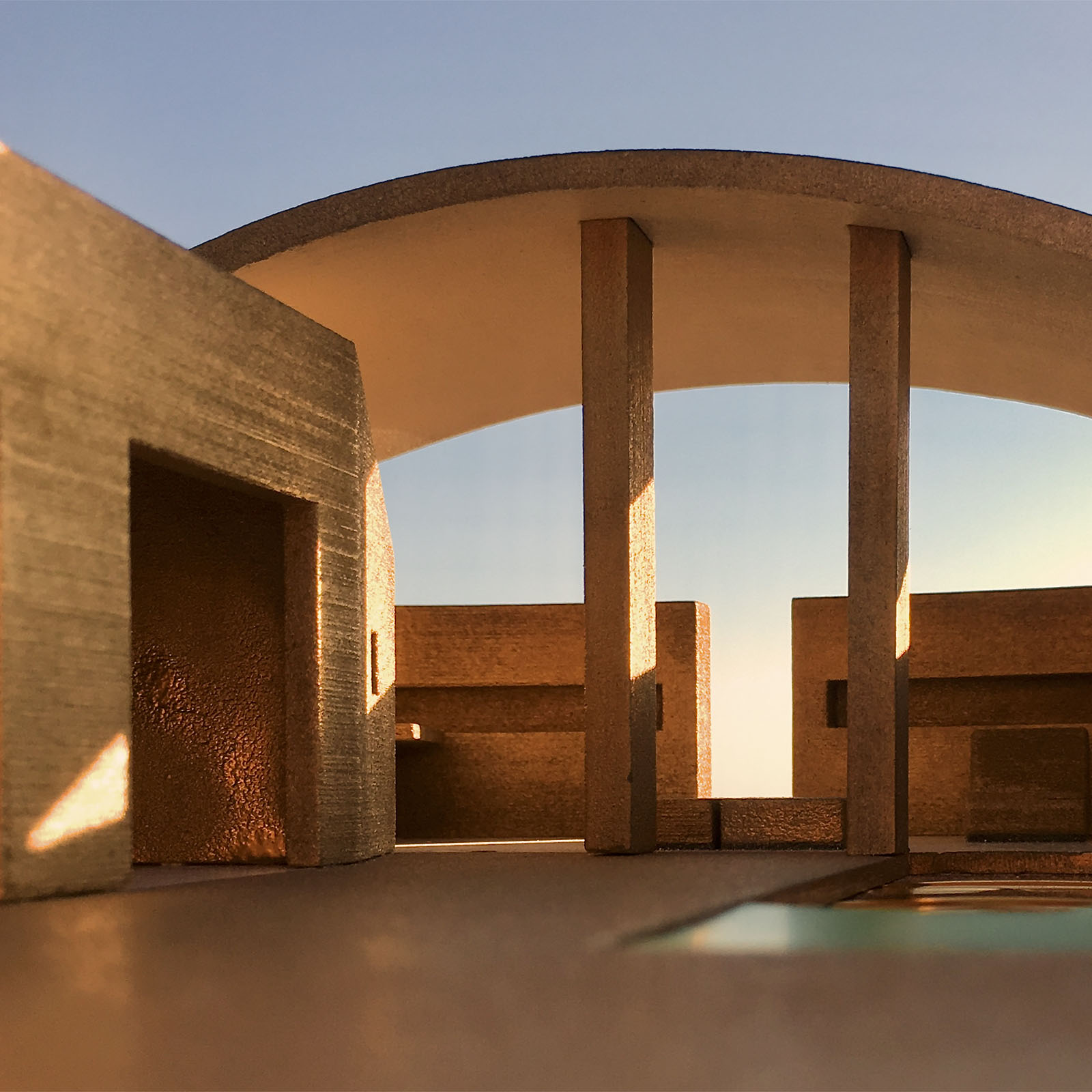
Years ago, around Marrakech, spread out over the arid plains, I saw some large fences. From the outside, I could not understand what lay beyond, but I believe that they were lodgings. What could be within those walls? What was life like there? These questions stimulated my imagination for some months. Today, in the project commissioned by Wallpaper* magazine, I tried to imagine a possible solution. From the palace of Akhenaton to the projects of Mies, history is full of examples of courtyard houses. This mode of living fascinates me because it brings into question the need to define an 'external'. So, rather than identify itself with its shell, the building finds its true essence within, where the parts of the composition can speak to each other inside the 'empty heart' of a patio, creating a dialogue that recalls the cities of a pre-modern Mediterranean. The layout is composed of two different juxtaposed buildings within a rectangular enclosure. The living building is characterized by curvilinear walls and opens out to the sky through large lunette-shaped windows. In the evening, from inside, the building looks like a polyhedron of concrete, witnessed through the windows of the rooms out to the patio. The shape of the living space interacts with the path of the sun in the sky throughout the day and seasons, creating a favourable climate. So, towards the south, the vaulted roof protrudes further than the glass, becoming a shield to suppress the high summer sun, whilst allowing the low flow of the winter sun.

Antonino Cardillo architect - Lime and Limpid Green Wallpaper* House in Marrakech


2009 Concrete Moon House, Melbourne AUS

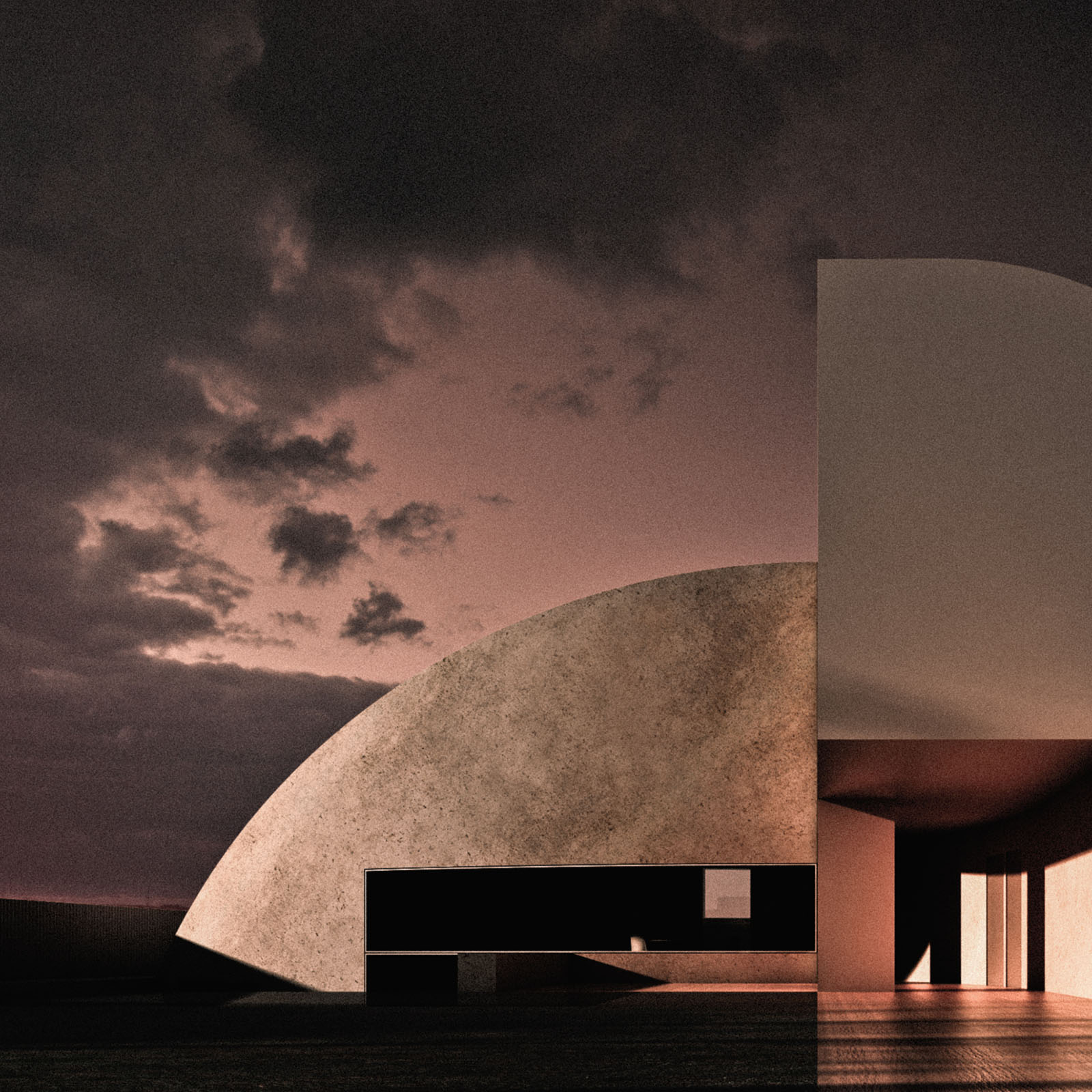
Secretly, everyone is attracted to what he is afraid of and sometimes fear reawakens desires that cannot be confessed. We remain perturbed, recognising that in remote parts of our interior universe resides an apparent otherness. We discover that the concepts of identity and difference are ambiguous, and often, paradoxically, difference becomes an extraordinary instrument of investigation into our own identity. Two distinct parts of a dwelling here become a pretext for telling a story between two diverse formal identities. Constructed in a suburb of Melbourne on a rectangular plot, in plan the house is in two parts: one public which in elevation looks like the upturned keel of a boat or a funny concrete moon that emerges from the pool in front, whose design is characterised by its sudden deviation from the straight pathway; the other, private part takes the form of a long, narrow building set against the perimeter, which, through the progressive decomposition of its component parts, creates a portico open to the garden but closed to the car park. In being created in space, each of the two geometric identities retains an echo of a presumed common origin. Thus signs of one often appear in the other, though elaborated according to different processes. Therefore the strategy of occupying the space goes beyond the mere bringing together of the parts. Though diverse, the elements have a reciprocal relationship, and the sound of one resonates in the other; especially in the main large cave, where the achievement of this osmosis introduces doubt as to where identity finishes and where difference begins.

Antonino Cardillo architect - Concrete Moon House in Melbourne


2010 House of Twelves, Melbourne AUS

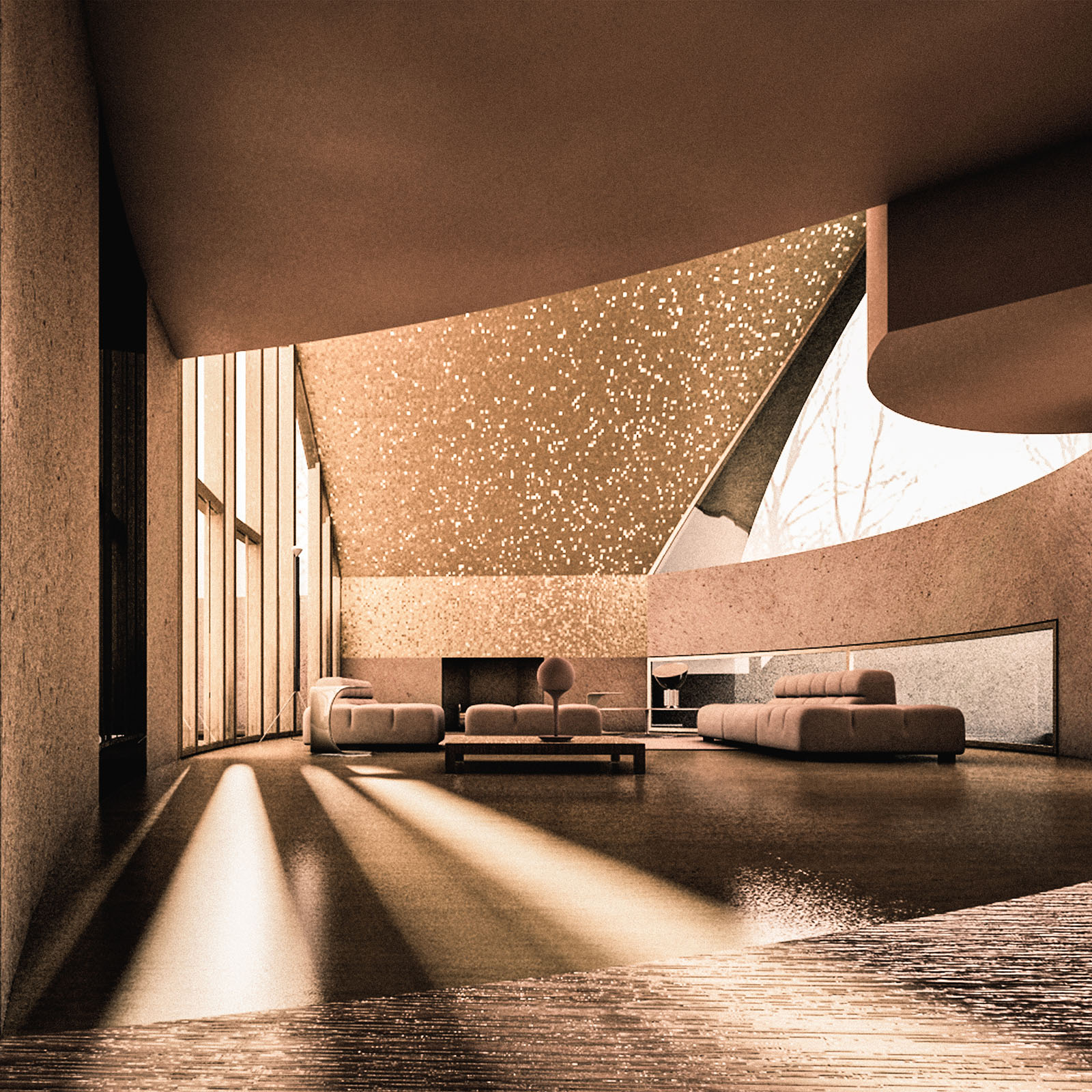
It was the ruins of ancient Rome that inspired this project, those unpredictable warps that in the eighteenth century appeared to European travellers on the Grand Tour as fantastic visions. Rather than the historic original, what fascinates still today is this state of progressive destruction that millennia carve in the forms, unveiling their most obscure recesses. So the ruin tells us of time passing, of slowly dying beauty, and in this its slow decay evokes a transverse narrative, as if trapped between the architecture and its definitive destruction. "House of Twelve" tries to invent a fantastic response to an interrupted story, following an empirical path made by progressive mutation of contemporary ideas and those of late antiquity, such as the theme of intersecting rings or the horizontal sequence of multiple spaces and forms, concatenated and directed according to a centrifugal expansionism, which unites works of Frank Lloyd Wright with the villa of the emperor Hadrian at Tivoli. Collisions and juxtapositions, furthermore – distant echoes of the American Center in Paris by Frank Owen Gehry – characterise the front and the public space of the house, whose roundnesses appear, from the road, to be deeply sculpted. As well as restoring thickness to the façade, these excavations make it permeable to the winter sun, which reaches to illuminate – with a grazing light, interpreted by the cavities – the courtyards at the rear. In particular, the living space, with its diaphanous vault in gold mosaic, the ripples of the mirrors of water at the edges and the consequent manifold reflections of light, appears from the main courtyard as a baroque "room of light", here reinvented in an urban key.

Antonino Cardillo architect - House of Twelve in Melbourne


2010 Nomura 24 House, Hyogo JP

House on two levels of medium size built on a hill on a trapezoidal plot in a suburb in the district of Hyogo, overlooking Osaka bay. Wooden structure, white washed walls and sloping pitched roof. Sleeping area on the ground floor - three bedrooms with bathroom and genkan - and living area on the first floor - wc, kitchen, patio, dining area, sitting room and washitsu. Formally, in plan, the two longer, non-parallel sides of the plot define two right-angled systems which find their formal connection on the third side, on the road, defining in elevation an incisive, faceted shape. Its diverse surfaces mutate the intensity of the light according to the incidence of the sun. Inside, on the first floor, a large polygonal living room with seven sides possesses the inexact quality of certain medieval Italian piazzas, on whose sides the openings - now windows, now doorways - describe multiple directions of aspect and travel. The irregularity of the geometry, therefore, crystallises in the shape a willingness for dialogue among the parts which make up the whole: kitchen, Japanese room and window over the bay, foreshortened to avoid direct exposure of the interior to the road. Finally, at the rear, the narrow space created between the kitchen and the Japanese room picks out a small patio, whose windowed sides gather the afternoon diagonals of the sun on the tatami flooring of the Japanese room and reverberating blues inside the kitchen cavity. These two rooms give onto the living room through two low doorways cut into the white sketch of a high wall. Almost rationalised grottoes, these bedrooms made of independent light engage with the large polygonal room: dark and azure in the morning, light and warm in the afternoon.

Antonino Cardillo architect - Nomura 24 House in 宝塚市 兵庫県


2012 Purple House, Pembrokeshire UK

Nowadays obsession for ethnicity seals national identities. Most people seem to ignore the erratic unfolding of ancient fluxes which moulded European lands. Lost in their dull present, they forget the rich pathways leading from the past to our time. Just a few memories. By the middle ages, between 1130 and 1194, England and to some extent Wales and Ireland, shared with Sicily a common Norman domain: Byzantine mercenaries and recognizers of Arabian culture after capturing Sicily, these conquerors from the North Sea introduced a fascinating network between the shorelines of the north and Mediterranean. Making British history for the first time since the Roman era, they broke once more the islands' isolation. Introducing the number zero and many innovations from Middle-Eastern regions into Europe – not least bringing back ancient Greek and Roman classical text manuscripts – they laid the foundation for the birth of a Modern European era. But history is full of violence: the dominant possession of a submissive culture manages to disguise the larceny by carefully rewriting history; and where memory lacks misunderstandings begin. Learning from this, might architecture heal history's wounds? Might it have the power to awake the missed routes concealed behind day-to-day life, revealing the whole cloaked behind the gloomy curtains of ignorance? Purple House represents an unconscious and personal language trip into the Norman legacy: exploring diverse elements, following paths empirically, re-evoking remote visions, aiming to find a common lost sense: what were the forgotten exchanges between England, Wales, Ireland and Sicily?

Antonino Cardillo architect - Purple House in Pembrokeshire


INTERIOR DESIGN


1997 Green Flat, Trapani IT

with Antonietta Iolanda Lima

Antonino Cardillo architect - Green Flat in Trapani


2005 Biancone Flat, Brescia IT

This is an appartment for a single person in a rectangular plot of seven metres by nine in a development of terraced houses. Living, dining, cooking space, bedroom, studio and bathroom comprise the functional content. Here the language is stereometric; curved and inclined surfaces are omitted. The objectives were to maximise space and light. In plan the square becomes the generating vocabulary of the space. In a coordinated series, following the tangents of a box room which is itself quadrangular, the rooms are laid out: living room-diner, bedroom and studio. Five, four and three metres, in order, the sides of each of them, organised in descending order of size which fulfils the dual need of functional and geometric arrangement, in relation to the circumscribed shape of the external perimeter. Through the combination of the square layout of the rooms and off-centre access the highest possible flexibility of the internal spaces is guaranteed. A narrow lateral rectangle forms the bathroom, accessible from the fourth door of the box room, and kitchen adjacent to the living room. This last becomes the pretext for "excavating" one of the walls from the living space which characterises it. The functional requirement of shielding the kitchen area becomes the pretext for building an assembly of right-angle spaces and wall. In the reciprocal living areas together in natural light, cut by the narrow ribbon window at the rear, one of the margins of the elementary geometry of the living room is worn away.

Antonino Cardillo architect - Biancone Flat in Brescia


2006 Villa Borghese Terrace, Rome IT

Antonino Cardillo architect - Villa Borghese Terrace


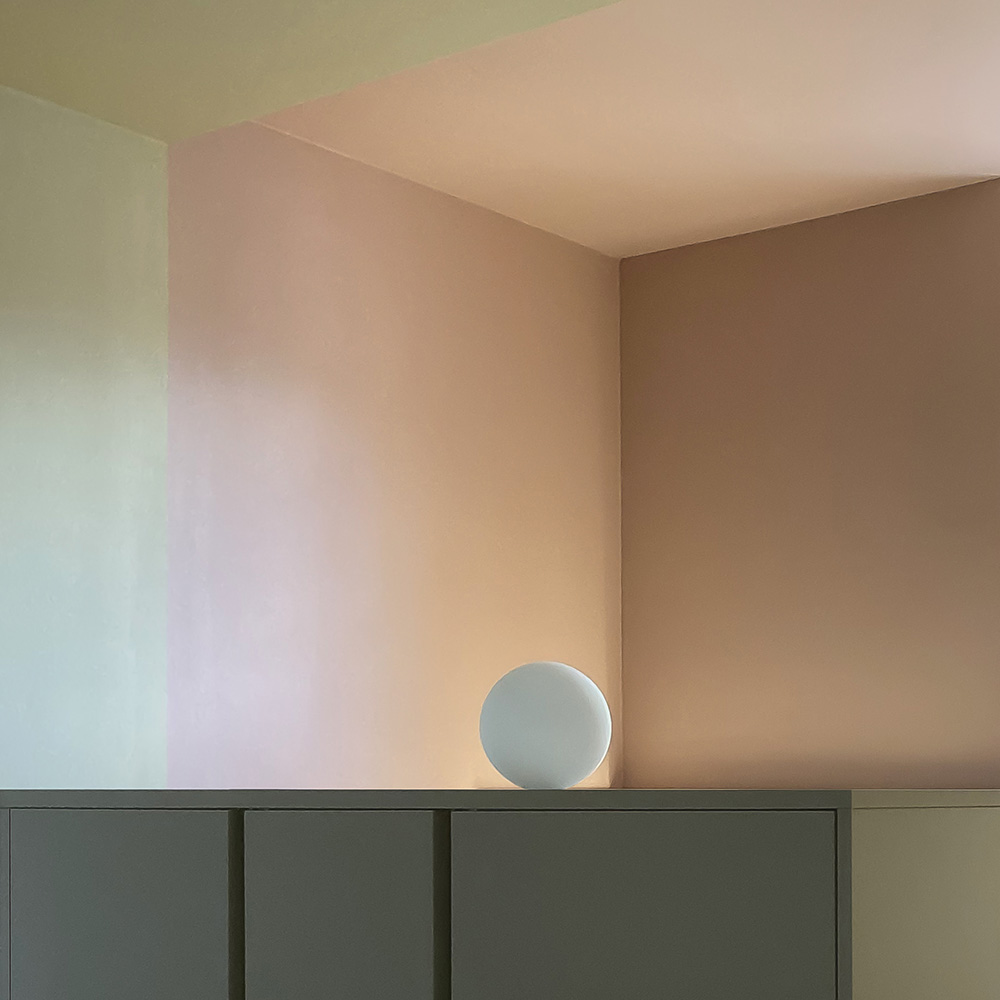
2008 Nona Flat, Rome IT

Antonino Cardillo architect - Nona Flat in Rome


2008 Grey Flat, Trapani IT

Antonino Cardillo architect - Grey Flat in Trapani


2011 Monteverde Flat, Rome IT

Antonino Cardillo architect - Monteverde Flat in Rome


2011 New Order's Light Design, Rome IT

Antonino Cardillo architect - New Order's Light Design in Rome


URBAN DESIGN


1995 Hexagon Building, Trapani IT

Antonino Cardillo architect - Hexagon Building in Trapani


2002 Canto Sospeso, Trapani IT

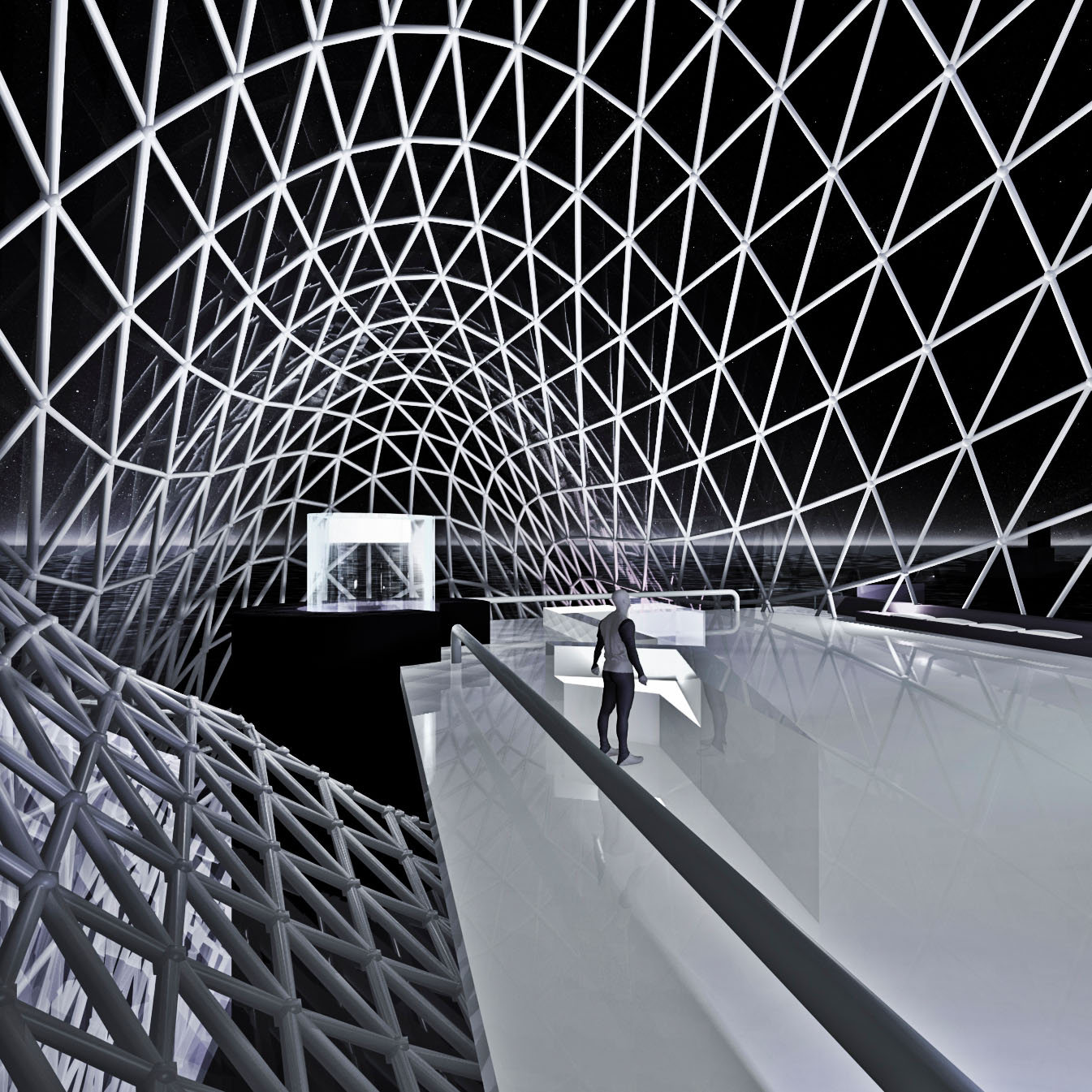
Penetrating the emptiness and reinventing it, a system of prisms cuts the space of the sky into a virtual three-dimensional pagination. Its surfaces exchange reciprocal refractions, reflections and transparencies. Two linear buildings abandon their vertical columns. Climbing high they are directed according to inclines, inventing a composition characterised by a space enclosed but at the same time eluding its borders. Structurally reciprocal and reactive, the two constructions mutually compensate for the excesses of load: like the arms of a scale, the asymmetric "Wings" of the hotel balance themselves on a quartet of large trellises. Each follows a different direction. One inclines steeply downwards illuminating the surface of the sea, the other hovers horizontal in the space forming an impressive cover on the beach underlying and beginning, equally, a subtle relationship with the office building. This last, extended vertically for a short distance, veers away at a certain point creating an inclined plane at right angles to that of the hotel, thus suggesting a fleeting continuity between beach and sky. Each block has distinct accesses. That of the hotel is invisible from the outside. The building has no points of contact with the ground and hovers over the sea on giant stilts. Access is gained by way of an underwater passage. From this underground space, completed by a car park, four glass cylinders emerge, inside each trellis, the elevators, coming out of the water and crossing the full height of the covered urban space, reach the reception area in the high flat wing of the hotel.

Antonino Cardillo architect - Canto Sospeso in Trapani


2001 Echoes Entertainment Centre, Trapani IT

Having to be at least in intention a lasting phenomenon, architecture "puts up with" entertainment. Entertainment is ephemeral, mutable, and a building that tries to fix the shape of a space in time is destined almost always to fail. Is an architecture of amusement possible then? Probably not, because it is difficult to surpass its own time unless it incorporates such a strong subliminal content for it to become significant in itself, able then to transcend the function for which such architecture was born, transforming the same function into a pretext. Entertainment certainly influences actions and thoughts. It is a form of social control. A responsible architecture can ignore these difficult presuppositions only with difficulty. The architectonic complex is born out of the City and from the urban road system grows its intricate sequence of multiple pathways, whose development on the sea structures the diverse forms of the composition. These designs which curve following the wind, in the same way as the medieval streets of the cities of the sea, structure and condition the form of the buildings so as to realise the functional content of the complex. Pub, restaurant, bar, bookshop, discothèque, terrace and stage appear distinguishable but interconnected according to an "urban" poetry that makes a complex stratification of signs. Each form, however, appears transfigured and its being in the complex renders it something else, acquiring for it new meanings. Each part resonates in another constructing a stratified reality, as in an ancient village where life and time leave tracks on the ground.

Antonino Cardillo architect - Echoes Entertainment Centre in Trapani


2002 LTBML Aquarium, Trapani IT

Pathways. It is through the paths that we can understand the structure of the building and the reason for the architectonic language. In aiming to regenerate the site, the design tries to spark, through a branching circulation in the three-dimensional space, a process of appropriation and knowledge. Thus the building forms a three-dimensional observatory of the marine landscape. For this reason the Foyer extends 20 metres over the surface of the sea, inside a glass creation which, enveloping it, condenses the internal cavities without making a rift in the landscape. Usually, in buildings, the shape of the walkways and thus the spaces is determined by walls. In traditional building the shape of the walkway coincides with that of the space. This project experiments with the deconstruction and the independence of these two entities. The floors do not coincide with the spatial limits of the surroundings, be they walls or glass surfaces. In the Foyer the fluid and aerodynamic shape of the glass shell has at its heart a rectangular platform. Here, the terms "floor", "ceiling" and "walls" are thrown into disarray. The perimeter glass surface develops within the slabs of the floor, transfigured from urban piazza to magic carpet apparently suspended in mid air. The only meeting points between the two entities are at the opposite corners of the rectangle. But the event is very brief. Only in these small areas is it possible to "touch" the glass shell. The rest rotates inside, in space, elusive.

Antonino Cardillo architect - Let There Be More Light Aquarium in Trapani


2003 Links as Architectural Space, Trapani IT

with Pietro Maltese and Ignazio Colomba

Antonino Cardillo architect - Links as Architectural Spaces in Trapani


2006 Residence, Carpenedolo IT

Antonino Cardillo architect - Residence in Carpenedolo


2007 Birnbeck Island, Weston-Super-Mare UK

This architectonic complex is born out of the pre-existing piers and buildings developing into a system of pathways. Like a big naval vessel, a curved shape embraces all the diverse elements of the composition, substituting an old concrete platform with the new basement building. Constructed five metres beneath the main pier, it is accessible from a ramp near the main gate of Birnbeck Island. Its sequence of flexible spaces links all the buildings on the island from below. The vessel design counterpoints the new tall buildings, in plan strategically oriented following the double orthogonal reference system created through pre-existing signs. Two different materials divide these building surfaces: warm concrete at the bottom and planking at the top. The method of occupying the void synthesizes diverse traditional architectural layouts (tower, linear, cantilever and city gate). In each of their narrow frontages, at the top, a big window marks the seascape creating a panorama like multitude of lighthouses. Moreover, these primary volumes are written through several unconventional signs that communicate to the outside the different spatial situation of the interiors, according to an "urban" poetry that makes a complex stratification of meaning. Each episode, however, appears transfigured and its being in the complex renders it something else, acquiring for it new meanings. Each part resonates in another constructing a stratified reality, as in an ancient village where life and time leave tracks on the ground.

Antonino Cardillo architect - Birnbeck Island in Weston-Super-Mare


2007 Nude Tower, Rome IT

This development aims to give form and substance to an unexpressed ambition of present-day Rome: that of realising a large panoramic hotel in the ancient centre, one which creates at the same time a new urban polarity that can suggest an original, audacious and modern vision of the city. The building, situated at Lungotevere dei Mellini, in the area where the "Prati" quarter looks towards the ancient city, occupies two large irregular islands of the nineteenth-century grid. From an ample platform which accommodates car parks, commercial space and a large garden on the top, there emerge two vertical structures: a low tower for offices which connects the new complex with the adjacent islands, and another white tower in travertine with rectangular foundation, oriented towards the river Tevere. This appears from the road to be cut into two thin slabs, set apart from the space generated by the connective horizon of each floor, that becomes the entrance hall to the hotel on the riverside. On the long sides of the tower, the serried vertical reiteration of the tripartite windows, externally in rows, verticalises the central area of the impagination of the two opposite walls. At the corners, full brickwork encloses the vertical connective of stairs, lifts and equipment, defining the stereometric character of the monolith. Finally, on the attic floor, 90 metres above ground, an immense room, defined by ample expanses of glass and intended for multi-functional use, forms a new observation point over the city. So, at night, this lounge hanging in the sky appears as a great gate of light suspended in the dark, giving rise to an idea as simple as it is evocative: the crown of the tower is no longer a physical object, like a spire or an antenna, but a penetrable and mutable space.

Antonino Cardillo architect - Nude Tower in Rome


RETAIL DESIGN


2004 Star Hotel Rosa, Milan IT

with Carlo Alberto Maggiore and Fabio Nonis

Antonino Cardillo architect - Star Hotel Rosa in Milan


2010 Sergio Rossi Men's Store, Milan IT

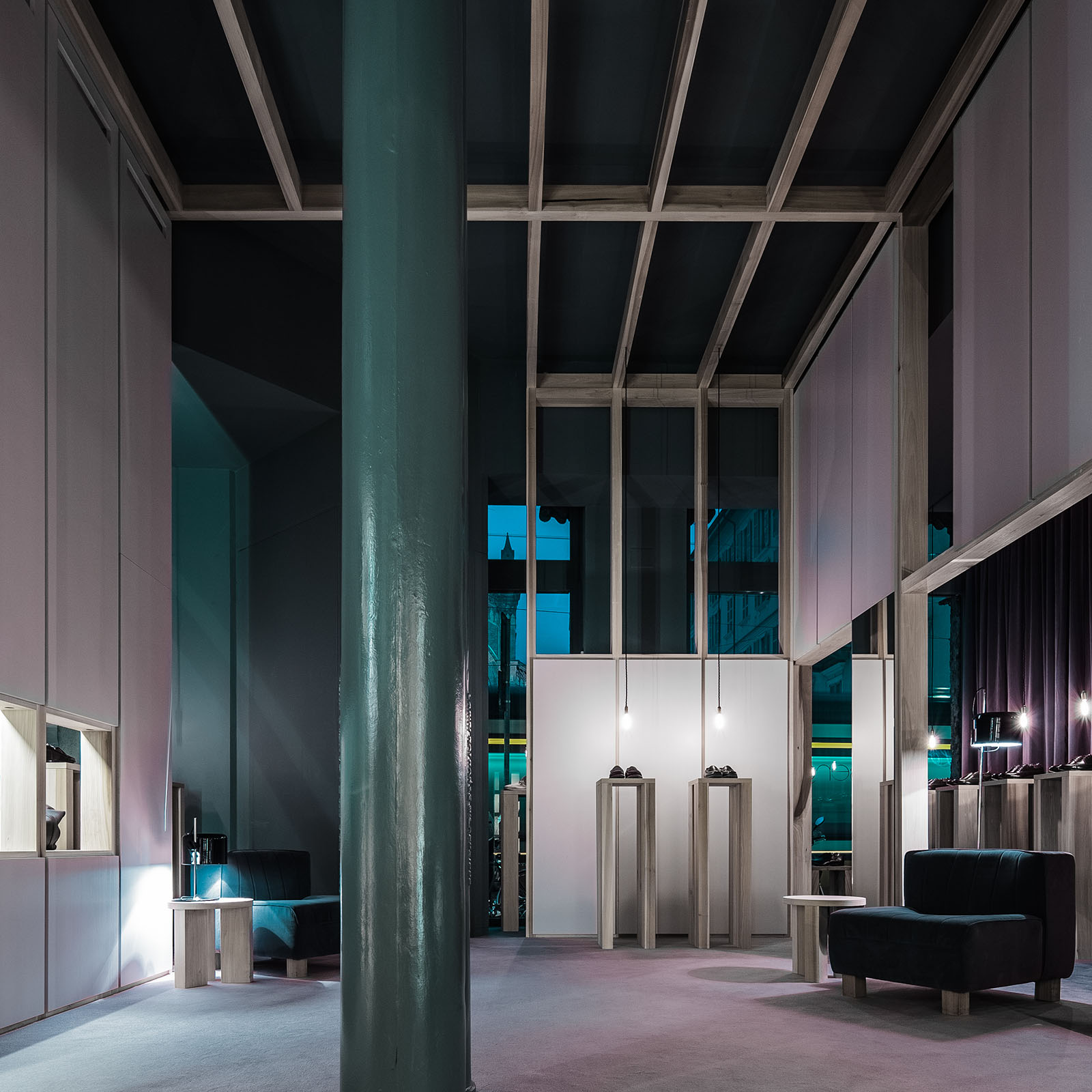
The idea of the insertion of a building into another, is above all a recurring theme in the architecture of the past. From the medieval schola cantorum of the Basilica di Santa Maria in Cosmedin in Rome, to the fifteenth century of Leon Battista Alberti, who, in the Tempietto in Florence, simulates a miniature of the Sacred Sepulchre in Jerusalem inside a large room, to the Baroque experiences of the rooms of light and of the theatrical stage set, up to the neoclassical canopies of John Soane which, inspired by the unfinishedness of the Roman ruins, seem to fluctuate in a space made of light. Suggested by the ephemeral canvases of scenography, this system of construction is set out again here according to an Italian metre mutated from the Milanese rationalism of the nineteenth century. But the rational nature of this enclosure, structurally independent of the existing space, is put into doubt by the contradictions that are determined among the diverse identities of the space: that of the installation itself and the other, residual and amorphous, that of the pre-existing space made homogeneous by a grey-blue colour, and the urban landscape of Brera, time beaten by the episodic passage of the tramways. Thus the internal space is presented to the observer according to a progressive unveiling of different and partially hidden ambits, which suggests an alternative way to the conventional interior open-space which, as it often offers itself to view from the start, inhibits the imagination.

Antonino Cardillo architect - Sergio Rossi Men Store Milan


2012 Postmodern Café in V&A, London UK

This year, as a homage to the V&A's Postmodernism: Style and Subversion 1970-90 the London Design Festival has commissioned architect Antonino Cardillo to create a spectacular Postmodern Cafe at the Exhibition Road entrance - open throughout the Festival. The London Design Festival's dedicated entrance to the Museum at Exhibition Road plays host to the Postmodern Café, in homage to the masters of the movement; the café is a playful rendition of a colourful environment, for relaxation, repose and refreshment. Contemporary interpretations of Postmodern design co-exist with past realities, including elements designed for firms with roots in Postmodernism active today. [LDF]

Mies + Venturi. Modern in plan and "post" in elevation, Postmodern Café is a divertissement, a quest between Mies Van Der Rohe and Robert Venturi.

Archetypes. Like huge frescoes, the façades recall the Pre-Modern bond between Painting and Architecture. They refigure archetypal themes of Tympanum and Arc: the first – seen from Exhibition Road – features two contrapositive triangles in a Suprematistic broken tympanum. The second – diagonally perceived from the gate of the V&A – paints a stretched arc.

Inflection. On the walls, figures converge toward the centre. Though symmetrical overall, each side is unequal.

Symmetry and negation. Although symmetrical, they are perceived from diagonal points of view. The front view seems to be denied by the pathway.

Antonino Cardillo architect - Postmodern Cafe in Victoria and Albert Museum of London


pictures and texts © Antonino Cardillo

manifesto

projects

clients

press

flash

video

catalogue

acknowledgments

facebook

twitter

tumblr

linkedin

google +