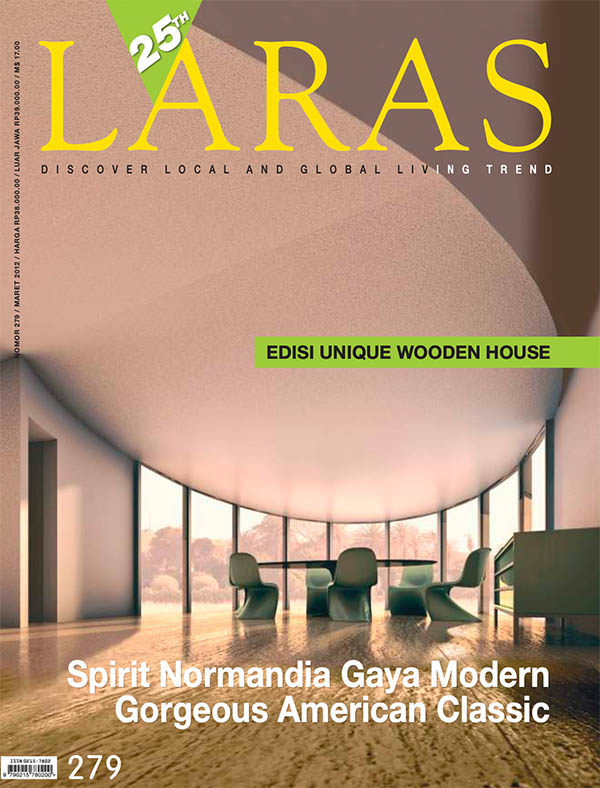
The sensual, arresting inspiration of flamenco takes form in refracted light through exploratory angles, shaping a space that seems able to tell its own story.
In the midst of Mediterranean woodland this house appears at one with its surroundings, and yet keeps a striking allure. Antonino Cardillo’s design near Barcelona, Spain, tells a great deal about what lies in the heart and what inspires it.
The beauty of an artistic creativity that can come from anywhere becomes the path of expression of this architect from [Italy]. Transposing music, lyrics, costume, dance, theatre or illustration into architecture is one way of bringing a soul into its details and its rooms.
Flamenco
In the work named House of Convexities in Barcelona, the architect drew his inspiration from flamenco, the Spanish dance the whole world knows. The beauty of a body’s movement that seems to master space, and the dynamic born of alternating pause and intense motion, are its most memorable part. The whole flamenco performance turns sensual and fleshy when carried by costume and music able to set off many readings.
Movements that feel secret, and yet so alluring and ‘luminous’ in a curvilinear choreography, continuous, at times arrested, only to stamp again. An inspiration that challenges the architect to work the design and its rooms into something more mobile and dynamic, while remaining an architecture that is still and solid.
The language of light
Drawing on sunlight then becomes the meeting point and the chief element that settles the whole expression. This house gains its identity when Antonino works the form and the details so as to bring light into the rooms.
Not merely as the functional brightness that serves the life of a house. Light enters instead through angles conceived for it, casting refractions on the walls, building space out of dark and bright, and turning the materials into a response to itself.
The position of the sun, never twice the same, then gives many faces from morning to noon and from month to month, as it shifts away from the line of the equator. ‘How many possible stories will this light tell over the course of the year?’ the architect explains. Here architecture makes light its ‘material’, the material that gives it a face. The play of shadows, the refraction on floor and wall, the form of walls and rooms become an artistic composition: a representation of the designer’s creativity and depth of feeling, which surfaces and can be enjoyed. These lights do look as arresting as a flamenco dancer moving in slow motion.
Drama
This two-storey house of 360 m² in all is designed with a composition of forms and an arrangement of rooms that produce a dramatic effect. At ten metres tall, the exterior takes on a scale of some grandeur, proportioned to the wide, open ground around it.
Working with the expression of solid and void, so tall a building achieves a touch of drama. Its appearance is neither still nor mute. The curved line from which each curved surface begins likewise finds its dimension thanks to the scenario of light that fills the rooms. Not shadow and light alone: the colour of the rays too plays its part in shaping the atmosphere of a room and the quality of feeling to be had in each of its functions.
Nor is the architectural form left conventional. Curving wall planes, a raked ceiling and the handling of mass within the rooms bring a dense architectural essence. As the architect puts it in his writing, ‘If Architecture is music in stone, can its “limbs” dance? Architecture only remains still in pictures. In real life its natural state is one of transition. Both man and light move within it’.
The ‘Flamenco y arquitectura’ idea the architect carries into this house is not only admirable: it draws one in, to feel and to move together with the light and the language of rays reflected by the materials within. Playing with light in the inspiration of flamenco, and feeling the architect’s intuitive touch, is what makes this house dramatic and alluring.
Laras cover featuring Cardillo’s House of Convexities. CGI: Antonino Cardillo
Source
Dyah Sunthy Satiti Wikan, ‘Bermain dengan cahaya’, Laras, no. 279, Jakarta, March 2012, pp. 88‑94, cover [Indonesian].